From Brain to Philly

How American Influence Rewired Lebanon’s Sandwich Culture
By Lina Saad
Influence rarely announces itself loudly. In Lebanon’s sandwich bars, it arrived quietly, wrapped in soft bread, layered with melted cheese, and named after American cities.
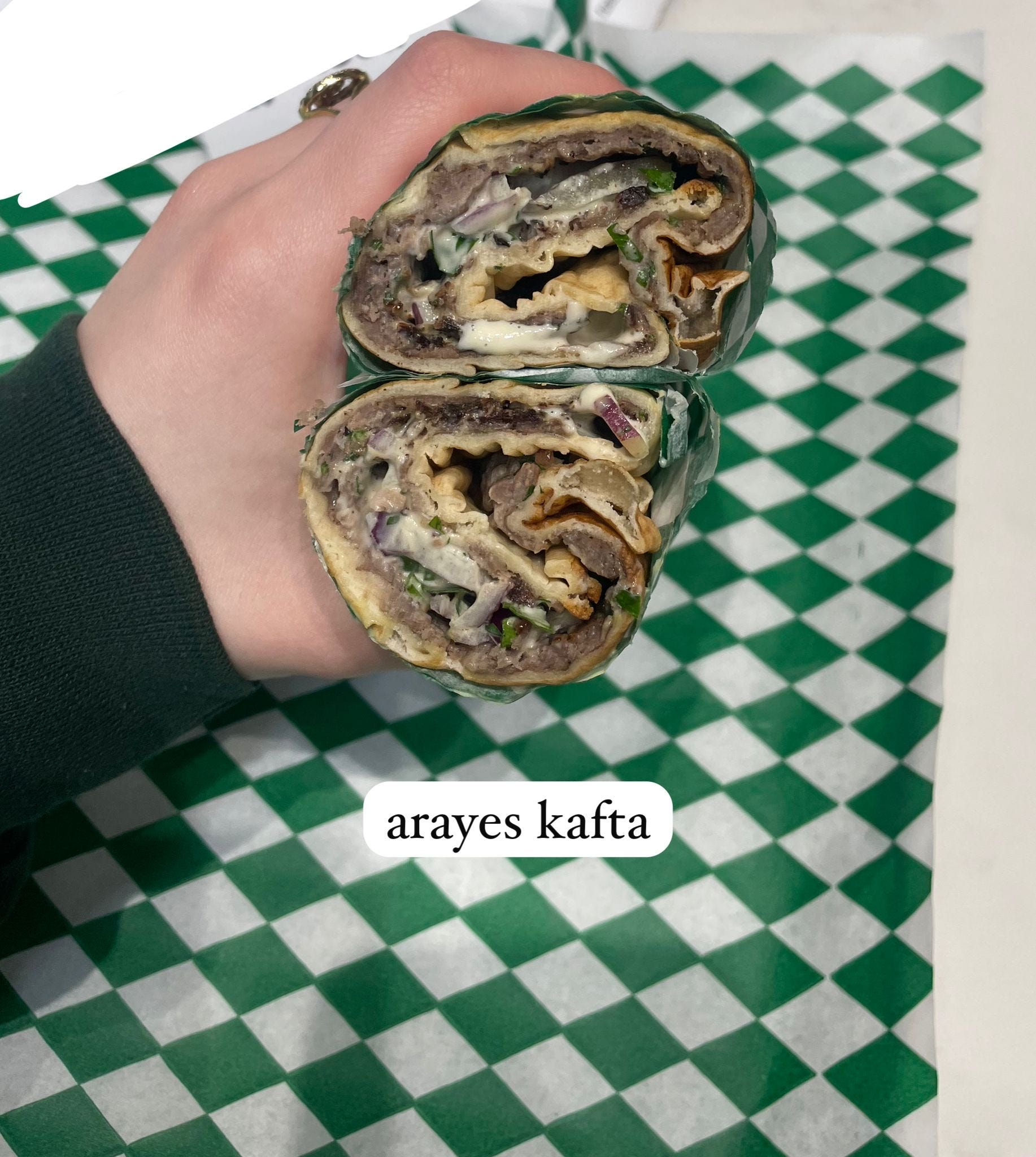
Before the mid-1990s, Lebanese sandwich culture was built on specialisation and confidence. Falafel shops sold falafel and nothing else. Shawarma counters turned slowly on their vertical spits. Grill men worked over charcoal, producing tawook, minced lamb kofta, or cubes of lamb, wrapped simply in bread with garlic and pickles.
Other sandwich bars were more daring still. Fried potatoes tossed with garlic and chilli were folded into bread. Makkalī; fried aubergines, cauliflower, courgettes, and chips were dressed with tahini and pickles. There were sandwiches of sheep brain, tongue with garlic and lemon juice, sweetbreads made from lamb or sheep testicles, even the spine of a sheep, scraped, seasoned, and eaten standing. These were not novelty foods. They reflected a street culture confident in nose-to-tail eating, shaped by village traditions and Beirut’s unapologetic appetite.
Then, in the mid-to-late 1990s, a new vocabulary appeared. Sandwiches were no longer named by ingredient or technique, but by geography: Philadelphia steak, fajita, San Francisco. Their arrival marked a subtle but decisive shift, one shaped by diaspora return, post-war aspiration, and the growing influence of American food culture on a younger generation of Lebanese eaters.
When Sandwiches Began to Travel
The Philadelphia steak sandwich originated in 1930s Philadelphia as a working-class Italian-American food: thinly sliced beef cooked on a flat griddle, served in a long roll with minimal additions. It was practical, filling, and economical.
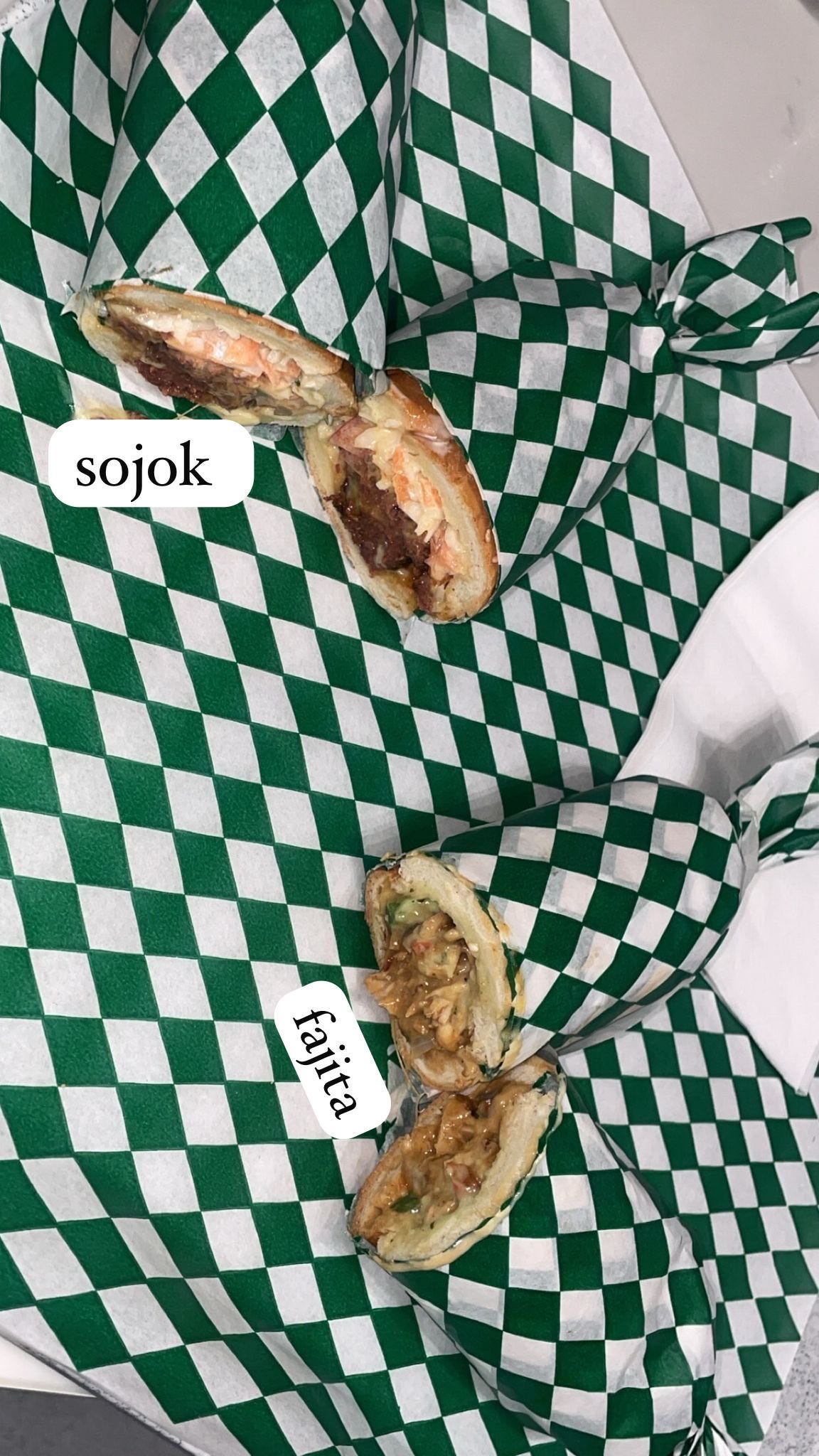
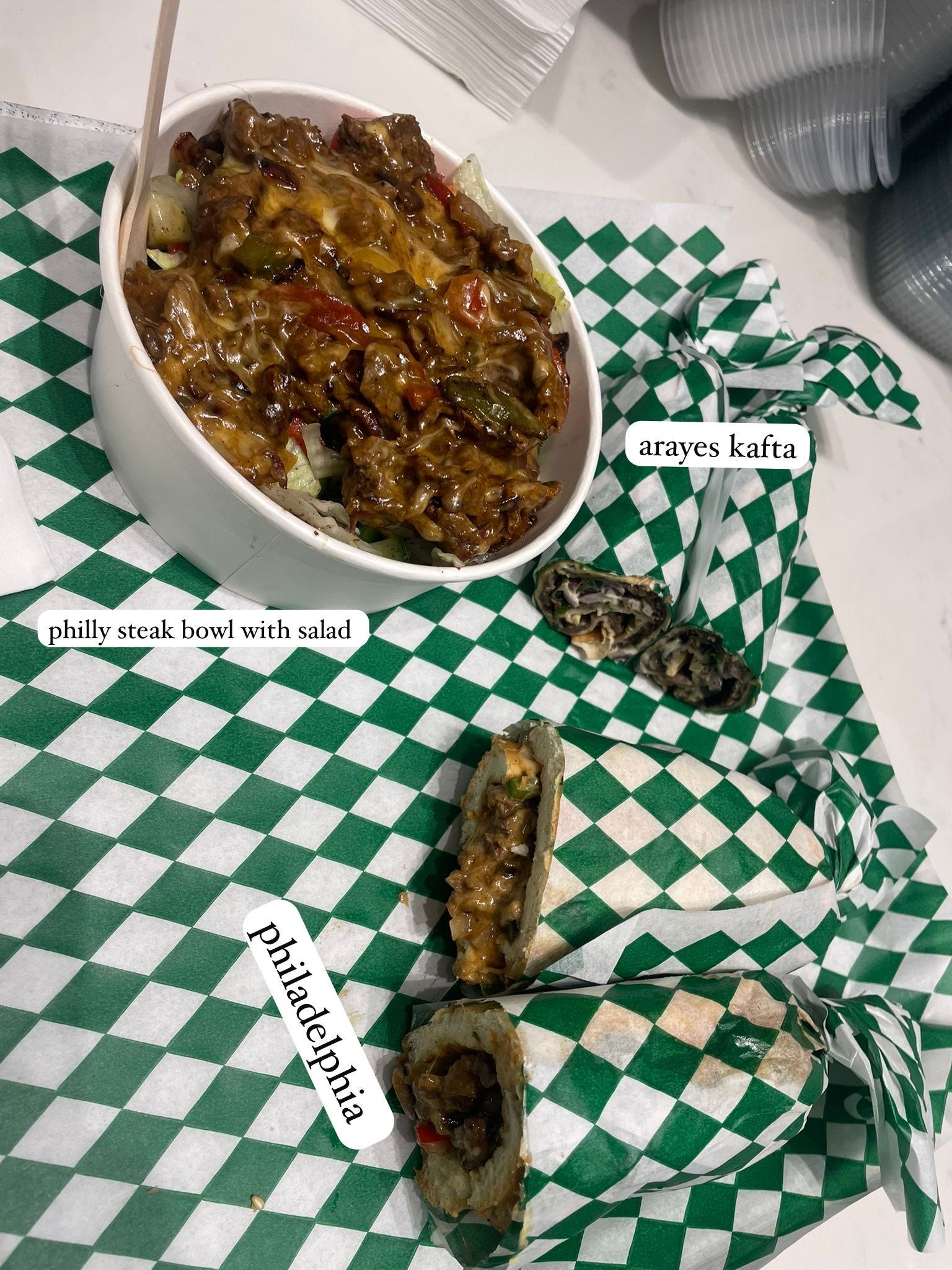
In Lebanon, it became something else. Cream cheese replaced processed cheese. Peppers multiplied. Sweetcorn and olives appeared. Sauces thickened. What was once utilitarian turned indulgent.
The fajita followed a similar path. Not Mexican but Tex-Mex in origin, it gained global fame through spectacle, the sizzle, the sound, the theatre. In Lebanon, the spectacle disappeared, but the name remained, becoming shorthand for spiced meat, peppers, and onions, folded into soft bread and drenched in sauces.
These sandwiches were new, but their adoption was rapid. They carried English names, American associations, and a promise of modernity. Ordering them signalled something beyond hunger, it signalled belonging to a wider, globalised food culture.
Diaspora as Influencer
This shift cannot be separated from migration.
By the 1990s, Lebanese Americans, many born or raised in the United States, were returning to Lebanon for holidays, carrying with them tastes shaped by diners, sub shops, and mall food courts. American sandwiches arrived not through franchises, but through people.
At the same time, Lebanon was reopening after years of war. Satellite television, American films, and fast-food imagery flooded daily life. American food carried symbolic weight: success, stability, youthfulness. In sandwich bars, that influence translated quickly and effectively.
These new sandwiches worked. They were customisable, generous, and sociable. They suited a younger generation eager for novelty without risk. And crucially, they came with sauces.
Sauce Culture and Competitive Identity
If American influence introduced the framework, Lebanese sensibility reasserted itself through competition.
Each sandwich outlet became known not for its meat alone, but for its sauce. Guacamole versus avocado sauce. Spicy mayo blends guarded closely. Garlic emulsions sharpened with lemon, mustard, or chilli. Customers debated loyalties fiercely.
In this way, influence was not simply absorbed, it was localised. The sandwich changed, but the instinct for distinction remained.
When Street Food Shapes the Land
The consequences of this shift extended beyond taste.
As demand grew for avocado-based sauces and exotic flavours, agriculture responded. In south Lebanon in particular, avocados and passion fruit expanded rapidly, while citrus groves declined. Figs, deeply embedded in the region’s landscape and food culture, were increasingly replaced.
This was not nostalgia versus progress, but economics. Sandwich outlets required consistent supply. Farmers adapted. Street food reshaped the land.
Influence, here, was not abstract. It was material.
What Children Eat Now
Perhaps the clearest marker of change is generational.
Today, when children visit Lebanon, even the villages their parents come from, the default meal is often a chicken sub sandwich: soft bread, grilled chicken, avocado sauce, mustard, chilli, mayonnaise. Familiar, global, safe.
The older sandwiches; the brain, the tongue, the fried aubergines slicked with tahini, rarely appear. They belong to another appetite, another confidence. This is not a judgement, but a record of how taste shifts, and with it, memory.
The Influence Returns: London as Mirror
This transformation has not remained confined to Lebanon. In London, it has begun to reproduce itself almost exactly.
Mayil, a Lebanese-owned sandwich bar with locations in Kingston, Notting Hill, and High Street Kensington, offers a menu that mirrors contemporary Lebanese sandwich culture rather than its older forms. Philadelphia steak sandwiches sit alongside sujuk and cheese, fajitas, and chicken subs, served in soft rolls and built around sauces; avocado, chilli, garlic much as they are in Beirut today.
What is striking is not the presence of these sandwiches in London, but their familiarity. Mayil does not present them as fusion or adaptation, but as Lebanese. In doing so, it reflects how a once-imported American sandwich language has been fully absorbed into Lebanon’s food identity and is now being exported again through the diaspora, intact and unquestioned.
A Culture Still in Motion
Lebanon’s sandwich culture did not disappear, it transformed.
From specialised counters to sprawling menus, from tahini to guacamole, from lamb brain to cream cheese, the sandwich charts Lebanon’s relationship with migration, aspiration, and global influence. It shows how power operates quietly, through everyday food, shaping taste, land, and memory across generations.
Influence, in the end, is rarely about what replaces what. It is about what becomes normal.
So interesting how in many places there’s a yearning for nostalgia and authentic food traditions as a symbol of identity - the ‘everything old is new again’ idea… and along side it, the way eating culture has taken on these outside influences and absorbed them. In Ukraine, chefs are championing Ukrainian, Crimean, Hutsul, Bessarabian and Cossack recipes and techniques as a way of reclaiming a past that was erased by Russification. Equally, everywhere you go you can find shawarma, hot dogs - and ‘sushi pizza’ places. Sometimes I think there’s nothing more Ukrainian than a gas station hot dog near the front line - adorned with a smiley face made of mayonnaise.
I wish I could get a GOOD falafel sandwich as easily in the Philly burbs as I can a steak. There are good places in the city proper, but here in my area of the suburbs, we have a Greek place that makes OK falafel, but they dress it and serve it in the Greek style like a gyro instead of the way the Lebanese places in the city do it.